Research
-
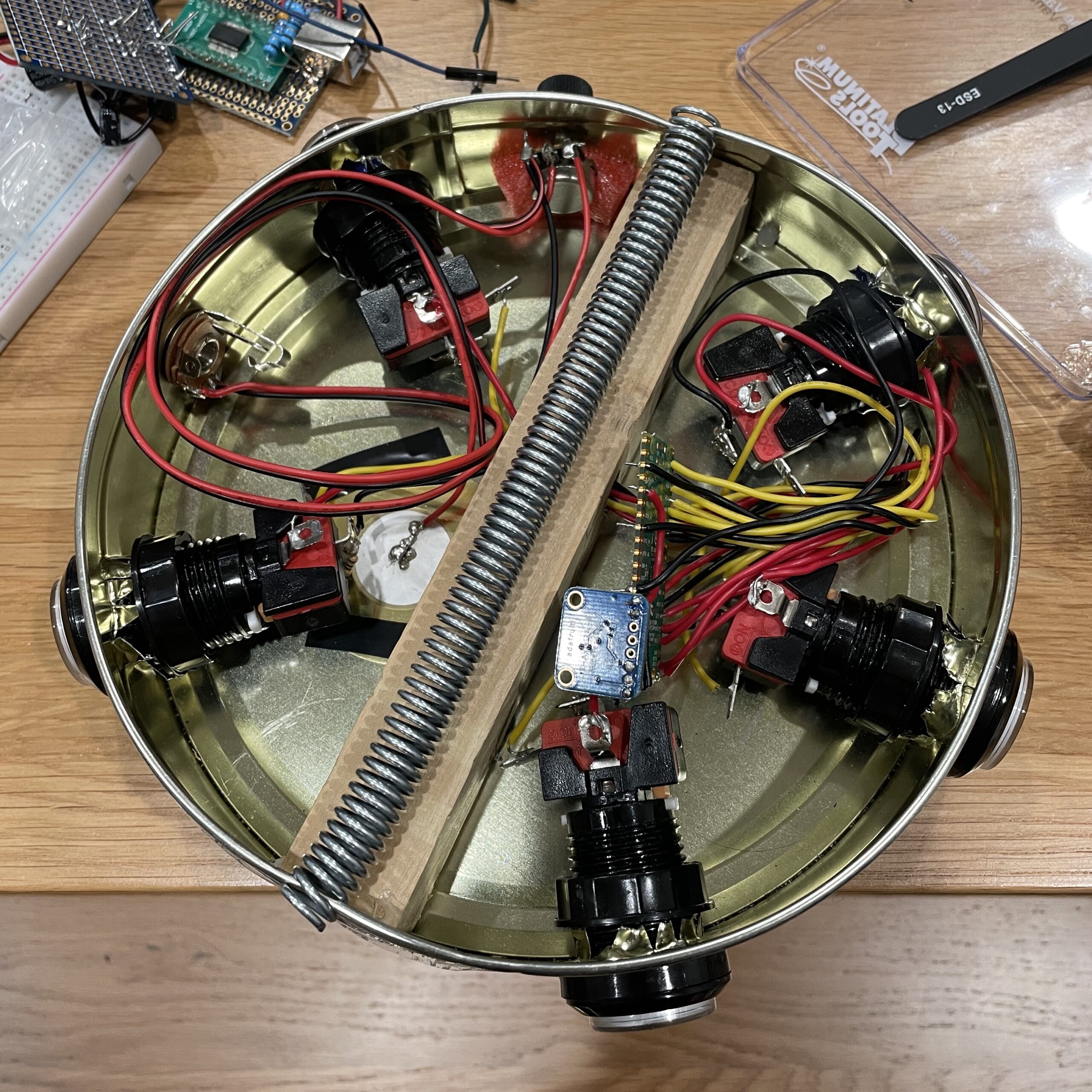
In the evolution of technology, various instruments and interfaces have been developed to harness these cutting-edge technologies, yet many fail to endure like their traditional counterparts. While technology attracts attention, its appeal doesn’t guarantee sustainability. For the longevity of these creations, it is imperative to address the fundamental question of why musicians need these new interfaces. This is precisely the focus of MIeX, a venture that navigates the convergence of Music Interaction and Human-Computer Interaction. MIeX strives to enhance the creative practices of live performers through experimental research in the design of devices.
tag: MIeX -
OVERVIEW We live in a world where almost everyone owns a smartphone. Particularly in my circle, nearly all my students, colleagues, and collaborators have Apple’s iPhone. Whether it’s an iPhone or an Android phone, these smartphones come equipped with versatile sensors. Despite their size and the expense of replacing them if dropped and broken, these functions can prove useful in emergency situations. Gyros (currently only available for iPhone) is an app designed to capture users’ motion and transmit the data to a designated device, typically a laptop, compatible with the OSC (Open Sound Control) protocol over WiFi or Ethernet. Some…
-
OVERVIEW When I write music, I draw inspiration from my surroundings and past experiences. Additionally, simple intervalic ideas often evolve and grow into a complete piece. As a creative practitioner, I take pleasure in developing new ideas from things that others may not have assigned meaning to yet. Recycling ideas and materials align with this concept. OSCILLATORS I designed three oscillators utilizing a single NPN transistor repurposed from the circuit board of my previous project. These oscillators were employed in recording compositions, though they remained uninstalled in an enclosure as I was in an experimental phase. One day, upon finishing…
-
OVERVIEW In 1997, Teresa Marrin and Joseph Paradiso at MIT introduced the innovative instrument, the Digital Baton, aiming to capture the essence of a traditional baton while providing a multitude of expressive possibilities for users. Our experiment delves into the application of a digital baton in connecting with musicians, emphasizing how it can enhance both rehearsals and performances. PROTOTYPE DESIGN The prototype’s size was modeled after a small orchestra baton, measuring just over one foot. The body consists of two parts, with the initially planned wooden long stick portion being 3D printed separately due to balance concerns. Currently, the digital…