laptop ensemble
-
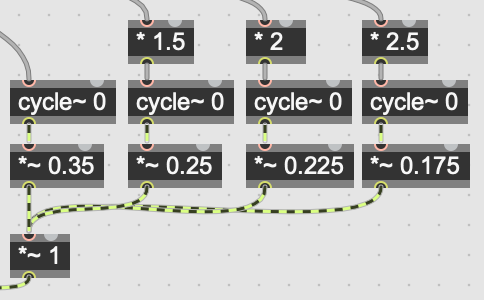
In this tutorial, we will explore the concept of additive synthesis and learn how to create a simple software additive synthesizer using Max.
-
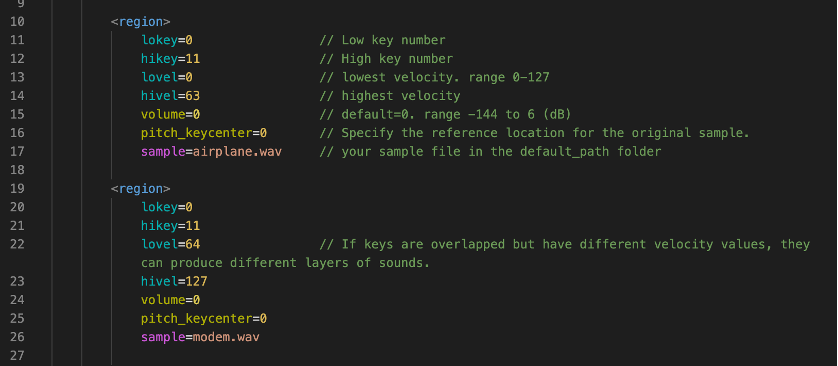
The SFZ format is a file format used for defining sound libraries in a plain text file. Essentially, a file with a .sfz extension contains instructions and parameters on how a sampler should play back a set of audio samples listed in the .sfz file. These instructions and parameters cover various aspects, including key ranges, velocity layers, mapping, modulations, and more. The ACIDized WAV file is another file format for samplers, and it is a single file with all metadata for the sampler. For end-users, this might be an easy solution, as you just need to drag the file into…
-

One of our main tools for performing sounds is a sampler. In this discussion, we will explore how to record materials, edit them to produce personalized sounds, and perform with them. In the early 20th century, music and sound were recorded, and in the early 1940s, French composer Pierre Schaeffer began recording and editing object sounds to create music, a style known as Musique Concrète. In popular music, the digital sampling technique was employed by R&B musicians like Stevie Wonder in the 1970s, and in the 1980s, portable sampling machines, such as the Akai MPC series, gained popularity. What we…
-
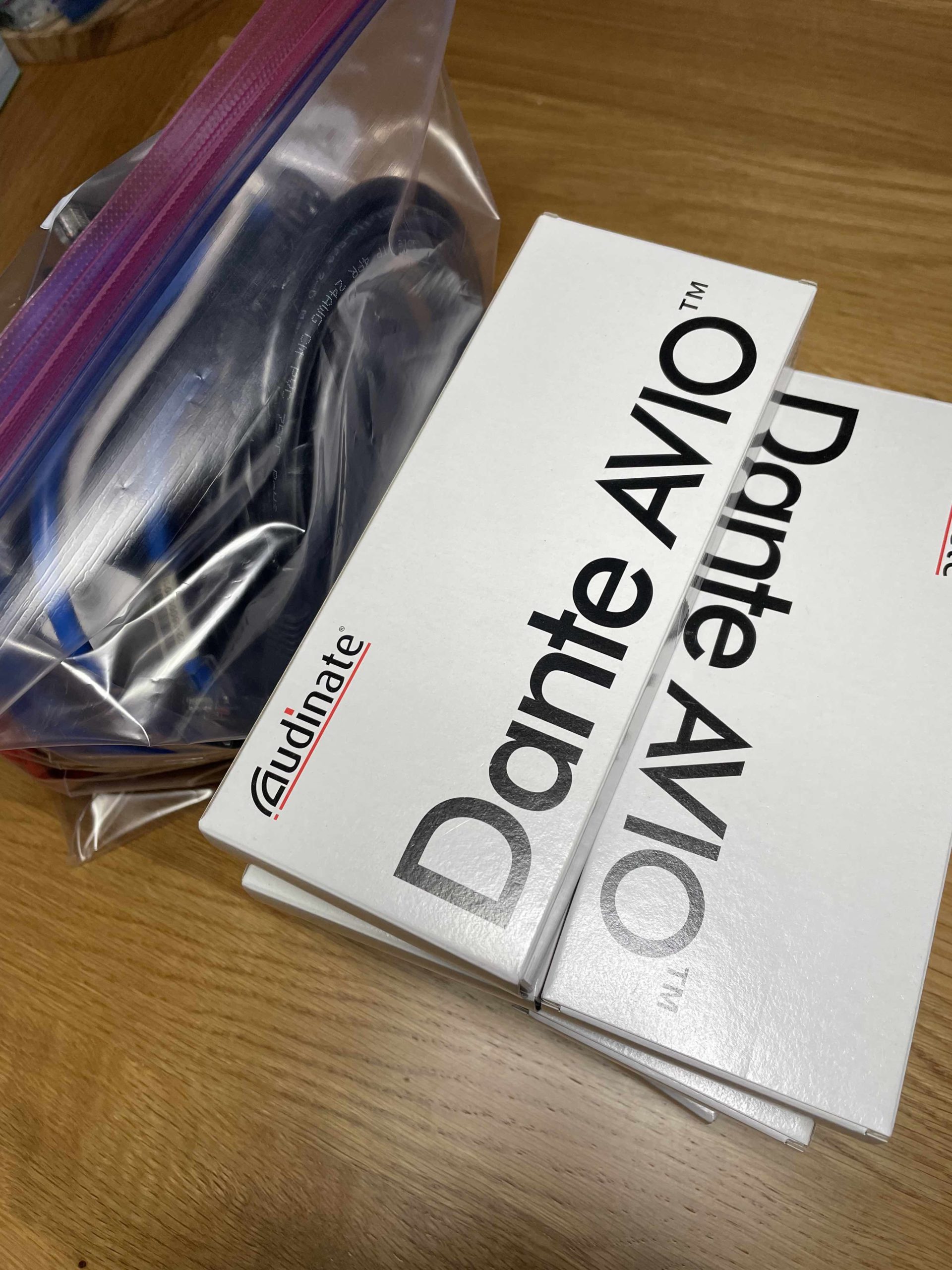
Even though laptop orchestras, referred to below as ‘LOrk,’ have a relatively short history, their traditional setup is inherited from ‘PLOrk’ (Princeton Laptop Orchestra). In this setup, each individual performer is equipped with ‘a laptop, a multi-channel hemispherical speaker, a variety of control devices (such as keyboards, graphic tablets, sensors, and others), and software developed in the ChucK and Max/MSP languages/environments.’ [1] Having each performer use separate audio equipment is not financially feasible for many individuals, especially if they aim to produce high-quality audio. PLOrk argues that this setup is natural, as each performer controls and is responsible for what…